 HMT

1179 字
6 分钟
线索二叉树、中序线索二叉树的创建和遍历
线索二叉树
按照某种遍历次序对二叉树进行遍历,可以把二叉树中的所有结点排成一个线性序列。在具体应用中,有时需要访问二叉树中的结点在某种遍历序列中的前驱和后继,此时,在存储结构中应保存结点在某种遍历序列中的前驱和后继。这些指向前驱和后继结点的指针称为线索,加上线索的二叉树称为线索二叉树,相应地,加上线索的二叉链表叫做线索链表。线索链表结构如下:
字段:ltag, lchild, value, rchild, rtag
中序线索二叉树的创建
线索链表和线索链表的创建
// 线索二叉树结点/*ltag:0 lchild指向该节点的孩子;1 lchild指向该节点的前驱rtag:0 rchild指向该节点的孩子;1 rchild指向该节点的后继*/typedef struct{ int value; struct ThrNode *lchild, *rchild; int ltag, rtag;}ThrNode;
// 创建线索树结点/*value:结点的值*/ThrNode* thrNode_createNode(int value){ ThrNode* node = (ThrNode* )malloc(sizeof(ThrNode)); // 初始化 node->ltag = 0; node->rtag = 0; node->lchild = NULL; node->rchild = NULL; node->value = value; return node;}创建二叉树(此时没有线索)
// 递归用数组没带线索的树// 用数组表示的二叉树,值为0表示没有这个节点/*arr:二叉树数组len:数组长度*/ThrNode* thrNode_createTreeByArr(int* arr, int len){ ThrNode* root = thrNode_createNode(arr[0]); thrNode_createTreeByArr_main(arr, len, 1, root ,'l'); thrNode_createTreeByArr_main(arr, len, 2, root ,'r'); return root;}
// 递归创建二叉树/*arr:二叉树数组len:数组长度i:当前结点在arr中的索引parent:当前结点的双亲RorL:当前结点是左子树还是右子树*/void thrNode_createTreeByArr_main(int* arr,int len, int i, ThrNode* parent, char RorL){ if(i >= len || arr[i]==0) { // 越界了或没有结点 return; }
ThrNode* node = thrNode_createNode(arr[i]); if(RorL == 'r') { parent->rchild = node; } else { parent->lchild = node; } thrNode_createTreeByArr_main(arr, len, 2*(i+1)-1, node, 'l'); thrNode_createTreeByArr_main(arr, len, 2*(i+1), node, 'r');}生成中序线索
// 递归生成中序线索void thrNode_thrTree(ThrNode* root){ thrNode_thrTree_main(root, NULL);}
// 执行函数/*cur:需要用来建立线索的主要结点pre:cur的双亲*/void thrNode_thrTree_main(ThrNode* cur, ThrNode* pre){ // 递归结束条件 if(cur == NULL) return;
// 左子树线索化 thrNode_thrTree_main(cur->lchild, pre);
// 当左子树为空,要指向前驱 if(cur->lchild == NULL) { // 如果有前驱 /* 中序线索二叉树中, 第一个输出的结点没有前驱, 最后一个输出的结点没有后继 */ if(pre) { // 建立前驱线索 cur->lchild = pre; cur->ltag = 1; printf("建立前驱 %d -> %d\n", cur->value, pre->value, cur->ltag); } } else { // 如果有左子树,那么cur结点就是左子树最右结点的后继 ThrNode* tmp = cur->lchild; while(tmp->rchild) { tmp = tmp->rchild; } tmp->rchild = cur; tmp->rtag = 1; printf("建立后继 %d -> %d\n", tmp->value, cur->value, tmp->rtag); }
// 右子树线索化 thrNode_thrTree_main(cur->rchild, cur);}中序线索二叉树的遍历
中序线索树的线索遍历
// 中序线索树的遍历
/*root:要遍历的中序线索二叉树printStr:输出结点值的格式startStr:遍历前要输出的字符串endStr:遍历结束后要输出的字符串*/void thrNode_thrTree_inOrder(ThrNode* root, char* printStr, char* startStr, char* endStr){ printf(startStr);
// 先找到中序遍历第一个结点,并输出 while(root->ltag == 0 && root->lchild) { root = root->lchild; } printf(printStr, root->value);
//当右子树不为空,循环 /* 因为是线索二叉树,所以只有最后一个输出的结点没有后继, 也就是右孩子,其他结点的右孩子是真右孩子或后继结点 */ while(root->rchild != NULL) { // 右孩子是后继结点 if(root->rtag == 1) { // 可以直接得到下一个结点 root = root->rchild; } else { // 右孩子不是后继结点 // 找右子树的最左结点 root = root->rchild; while(root->ltag == 0) { root = root->lchild; } } // 输出 printf(printStr, root->value); }
printf(endStr);}中序线索树的普通中序遍历
// 线索二叉树的普通中序遍历/*root:要遍历的二叉树printStr:输出格式*/void thrNode_inOrder(ThrNode* root, char* printStr){ thrNode_inOrder_main(root, 0, printStr);}
// 递归函数/*root:要遍历的二叉树tag:当前结点是不是线索节点printStr:输出格式*/void thrNode_inOrder_main(ThrNode* root, int tag, char* printStr){ // 如果当前节点为空或是线索节点,返回 if(root == NULL || tag == 1) return; thrNode_inOrder_main(root->lchild, root->ltag, printStr); printf(printStr, root->value); thrNode_inOrder_main(root->rchild, root->rtag, printStr);}遍历测试
测试代码
#define N 15
int main(){ int arr[N] = {1,2,3,0,4,6,0,0,0,5,0,0,7,0,0};
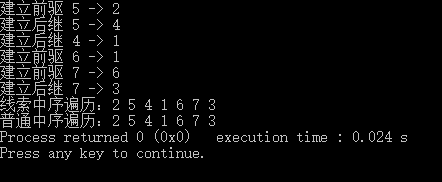
ThrNode* root = thrNode_createTreeByArr(arr, N); thrNode_thrTree(root); thrNode_thrTree_inOrder(root, "%d ", "线索中序遍历:", "\n"); printf("普通中序遍历:"); thrNode_inOrder(root, "%d ");
return 0;}运行结果
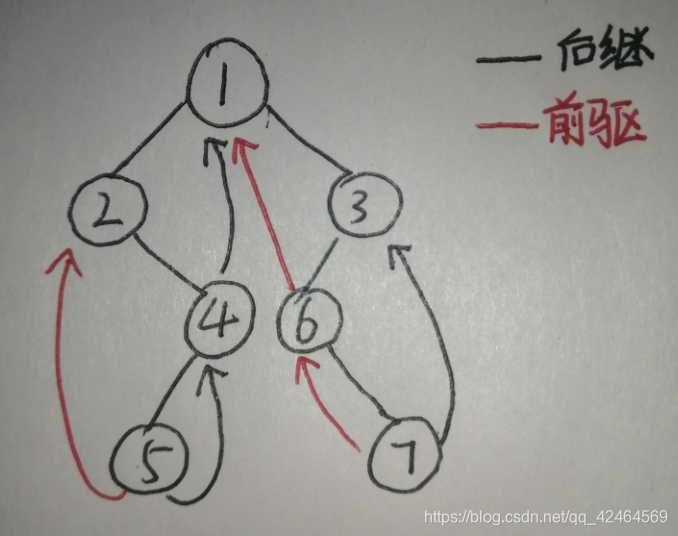
中序线索树结构
原文链接:CSDN
线索二叉树、中序线索二叉树的创建和遍历
https://blog.homura.work/posts/csdn/109607057/