 HMT

592 字
3 分钟
Q-Learning实战——找房间
介绍
样例来自A Painless Q-learning Tutorial (一个 Q-learning 算法的简明教程)
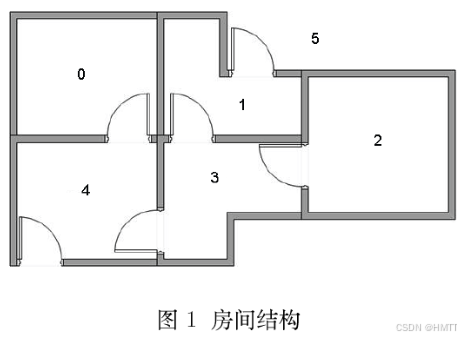
简单来说就是从某个房间开始,找到去目标房间的路径。
代码实现
import numpy as npfrom tqdm import tqdm, trange
room_num = 6room_paths = [(0, 4), (3, 4), (3, 1), (1, 5), (2, 3), (4, 5)]target_room = 5
# Q 矩阵,默认值填充0Q = np.zeros((room_num, room_num))# R 矩阵,默认值填充-1reward = np.full((room_num, room_num), -1)# 有路径的房间,奖励设为0for room_path in room_paths: if room_path[1] == target_room: reward[room_path[0]][room_path[1]] = 100 # 房间到达目标房间,奖励设为100 else: reward[room_path[0]][room_path[1]] = 0
# 双向路径 if room_path[0] == target_room: reward[room_path[1]][room_path[0]] = 100 # 房间到达目标房间,奖励设为100 else: reward[room_path[1]][room_path[0]] = 0
reward[target_room][target_room] = 100 # 目标房间奖励设为100print("reward:")print(reward)
max_epoch = 2000lamma = 0.8modes = ['one-path', 'one-step']# one-path 一直走,直到到达目标房间# one-step 只走一步mode = modes[1]
for epoch in trange(max_epoch): new_Q = Q.copy() current_state = np.random.randint(0, room_num)
def one_step(current_state, Q, reward, lamma): # 随机选择一个可行的动作 p_action = (reward[current_state] >= 0).astype(int) / np.sum(reward[current_state] >= 0) current_action = np.random.choice(room_num, p=p_action) # 更新 Q 矩阵 new_Q[current_state][current_action] = reward[current_state][current_action] + lamma * np.max(Q[current_action]) new_state = current_action return new_state, new_Q
if mode == 'one-step': _, new_Q = one_step(current_state, Q, reward, lamma) else: while current_state != target_room: current_state, new_Q = one_step(current_state, Q, reward, lamma) Q = new_Q
print("Q:")print(Q.round())这里有两种更新策略:
- one-path:一直走并每一步更新,直到到达目标房间
- one-step:每次只走一步,然后更新,然后再随机初始状态
运行结果
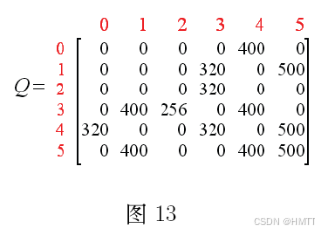
参考结果
 来自
one-path
Q:[[ 0. 0. 0. 0. 80. 0.] [ 0. 0. 0. 64. 0. 100.] [ 0. 0. 0. 64. 0. 0.] [ 0. 80. 51. 0. 80. 0.] [ 64. 0. 0. 64. 0. 100.] [ 0. 0. 0. 0. 0. 0.]]这里跟参考结果不一样是因为没有考虑自环且到达目标房间后就直接结束此次寻路,因此目标房间没有更新Q的相关值。
one-step
Q:[[ 0. 0. 0. 0. 400. 0.] [ 0. 0. 0. 320. 0. 500.] [ 0. 0. 0. 320. 0. 0.] [ 0. 400. 256. 0. 400. 0.] [320. 0. 0. 320. 0. 500.] [ 0. 400. 0. 0. 400. 500.]]这次的结果跟参考的一样,因为这里只考虑走一步,不管起始房间和结束房间是哪里都无所谓,因此最终结果跟参考一致。
原文链接:CSDN
Q-Learning实战——找房间
https://blog.homura.work/posts/csdn/140272454/